
We drop hundreds of bins across Mid Vancouver Island every year, and here’s the honest truth: half the customers who “ran out of space” didn’t actually run out — they packed inefficiently. A 15-yard bin loaded well holds real 15 yards. Loaded poorly, it holds closer to 10.
This is the crew’s shortlist of how to get the most out of every bin you rent. It’s simple stuff, but doing it right saves you from renting a second bin — or worse, having debris left over that you have to haul yourself.
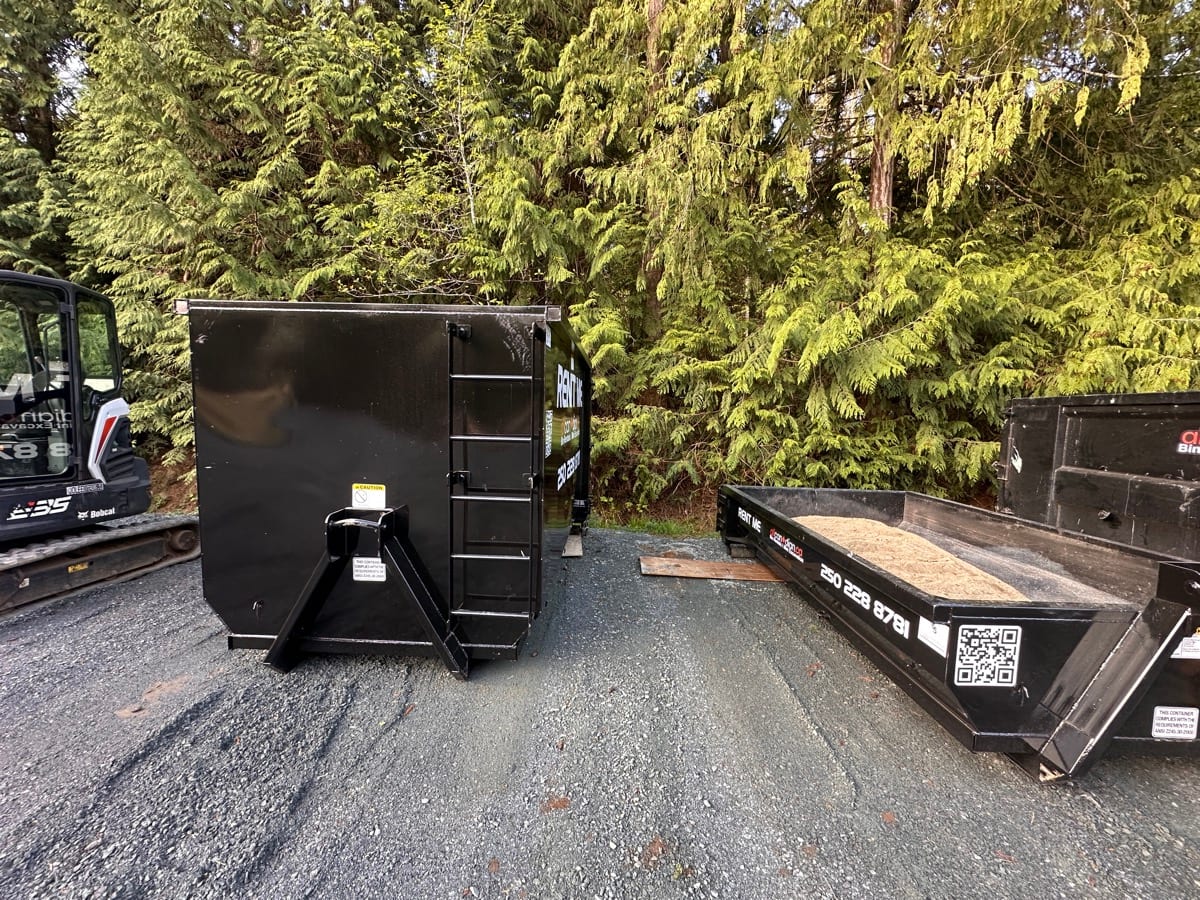
1. Load Heavy at the Bottom, Light on Top
This one’s mechanical. When we lift and dump the bin, the load shifts forward. Heavy stuff on top of light stuff crushes the light stuff, jams it against the door, and makes the bin harder to unload cleanly.
Bottom layer: concrete chunks, roof shingles, tile, drywall, packed soil. Middle: wood, framing lumber, cardboard, general debris. Top: bulky-but-light stuff like insulation, furniture, brush, plastic tarps.
Two side benefits: heavy stuff at the bottom keeps the bin’s center of gravity low (safer to transport), and it settles less over the rental period, so what looks full on Day 2 stays full by Day 5.
2. Break Down Everything You Can
The biggest waste of bin space is trapped air. Old couches, dressers, kids’ plastic play structures, empty cardboard boxes — they’re 90% air. Every foot of trapped air is a foot of bin you rented and can’t use.
Before it goes in the bin:
- Furniture: disassemble what you can. A dining table takes a quarter of the space when the legs come off.
- Cardboard: flatten every box. Full boxes take triple the space of flat.
- Long lumber: cut it to fit the width of the bin — sticking-out ends waste the corner.
- Bags of yard waste: dump loose, not in bags. Bagged brush wastes ~30% space.
- Bulky plastic: cut kids’ play sets, patio storage, planters into pieces.
Every 10 minutes with a reciprocating saw or a box cutter buys you an extra cubic yard.
3. Fill the Dead Space
After each layer of big stuff, there are gaps — voids between chunks of drywall, cavities under bookshelves, corners nothing fits into. Those gaps eat your capacity.
Fill them with:
- Small debris: broken tile fragments, screws in a bag, tarp scraps.
- Bagged garbage (junk drawer contents, plastic bags of small stuff).
- Loose insulation.
- Cardboard offcuts.
Think of it like packing a suitcase. You wouldn’t leave a shoe-sized hole empty — you’d stuff socks in it. Same thing.
4. Level as You Go, Not at the End
Waiting to “level things out” at the end almost never works, because by then the bin is a chaotic pile and moving stuff around is exhausting. Level as you load.
Every 2–3 wheelbarrow loads or so, take 30 seconds:
- Rake the surface flat with a garden rake or shovel.
- Push tall items down flush with the load line.
- Stomp down soft stuff (drywall dust, insulation) if it’s building up.
This is boring but it’s the difference between fitting a project’s worth of debris and having to leave a wheelbarrow-full sitting beside the bin at pickup.
5. Don’t Overload — Weight Limit Is Real
Every bin has two limits: volume (yards) and weight. You can hit either one first.
For a 15-yard or 20-yard bin, the weight cap is set so we can legally haul it on public roads. If you’re loading heavy material — concrete, dirt, roofing, wet drywall — you’ll usually hit the weight cap before you hit the volume cap.
Rough rule of thumb for weight-dense loads:
- 15-yard bin: don’t fill past halfway with concrete, dirt, or roofing.
- 20-yard bin: don’t fill past halfway with the same.
If you overload, one of two things happens: we can’t legally haul it (you unload some), or we haul it and you get charged an overweight fee. Neither is fun. Ask us when you book — we’ll flag material-mix warnings.
The tell: if you can’t push the last shovel of dirt in without it spilling over, and the bin looks half empty from the top, you’ve hit weight. Stop loading.
6. Save the Last 10% for Last-Minute Stuff
Every reno project generates surprise debris on the last day. The wall you didn’t think you’d knock out. The old fence panel you meant to reuse. The three garbage bags of packing material.
Load the bin to about 90% by Day 3–4 of your rental, and leave the last 10% for those Day 5–6 surprises. This is the tip that saves people from having to schedule an extra bin (which delays your project by another day and costs another delivery fee).
If you’re doing a bathroom or kitchen demo, save the top 10% for tile and drywall dust from the final sweep-out. That stuff always ends up being more than you think.
Bonus: Watch What You Put Near the Door
Rental bins have a swing door at the back for easier loading of wheelbarrows and mowers. When we come to lift and dump, that door area experiences the most force.
Don’t put:
- Anything sharp that could pierce the door frame (broken metal, glass sheets).
- Chunks of concrete right up against the door (they can crack the frame when the bin tilts).
- Anything unstable enough to fall on the operator when we lift.
Keep the door zone loaded with medium-density, non-poking stuff. Save the heavy and sharp for the interior of the bin.
The Real Reason This Matters
We drop and pick up thousands of bins a year, and the customers who load efficiently pay less per project. Not because we charge them less — because they fit one bin’s worth of debris into one bin. Everyone else ends up renting a second bin, or paying an overweight fee, or bagging leftover debris that didn’t fit.
Renting a bin is like buying a plane ticket: you get one seat. Pack it well.
When to Just Book a Bigger Bin Instead
If you’re doing any of the following, load-efficiency tricks won’t save you — you need a bigger bin from the start:
- Full roof tear-off (any size): shingles are dense and volume-heavy. Book a 20-yard, not a 15.
- Whole-house cleanout (moving, downsizing, estate): furniture is bulky. 20-yard, sometimes two.
- Deck removal: old deck lumber is bigger than you think. Especially if the deck is 12x14 or larger.
- Post-storm cleanup with fallen tree limbs: brush is 40% air even packed. Bump to 20-yard.
Not sure? Call 778-909-9874 and describe your project — we’ll size it right the first time so you’re not doing the “should I have gotten the bigger one” math halfway through.
Related Reading
- 15-Yard vs 20-Yard Bin: How to Choose
- What Can Go in a Rental Bin in BC
- What You CAN’T Put in a Rental Bin (RDN)
- Bin Rental vs. Parksville Transfer Station
- Move-Out Cleanouts in Parksville: 2-Day Playbook
Frequently Asked Questions
Q: Should I bag everything before it goes in the bin? No. Loose is better for space (bags trap air) and better for the driver (bags rip open in transport). Only bag small dusty stuff like drywall dust or garbage-drawer contents.
Q: Can I fill the bin above the top rail? No. Debris above the top rail is illegal to haul on public roads and we’ll ask you to remove it before pickup. Load to the top rail, no higher.
Q: What if I hit the weight limit before I fill the volume? Stop loading. Call us. We’ll pick up early and can sometimes drop a second bin for a small delivery fee vs. an overweight charge on the first one.
Q: Can I mix materials? Yes for most household waste. Not for banned materials (paint, propane, tires, electronics, hazardous chemicals). If you’re not sure, call before you throw it in.
Q: Do you provide a rake or shovel for leveling? No — bring your own. Most customers use a garden rake, a shovel, or a leaf-blower.
— The All Canadian Team